
The Silent Epidemic: Addressing Vitamin D Deficiency in Children
Introduction
Vitamin D deficiency is a prevalent but often unnoticed health issue affecting a significant number of children worldwide, earning it the moniker "the silent epidemic." India's own Comprehensive National Nutrition Survey (CNNS, 2016-18) found that 14% of children under 5, 19% of children aged 5-9, and 24% of adolescents aged 10-19 are vitamin D deficient (below 12 ng/mL). When insufficiency is included (below 20 ng/mL — the threshold the IAP considers clinically relevant), the figures climb to 49%, 56%, and 68% respectively [6]. Despite India's abundant sunlight, urban lifestyles, air pollution, and dietary patterns make Indian children among the most deficient in the world.
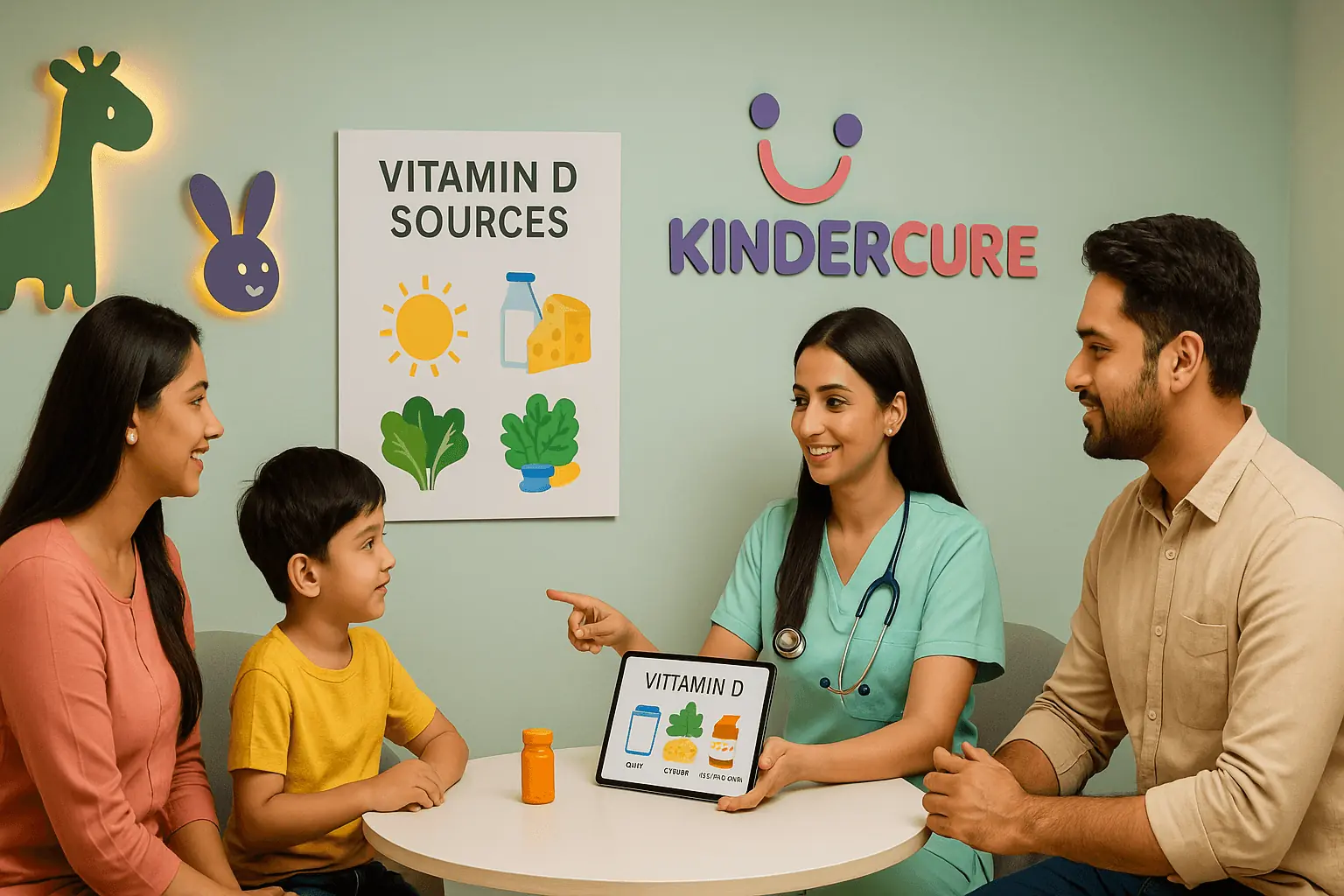
At KinderCure, we understand the critical role vitamin D plays in bone health, immune function and overall well-being in children. This guide explains why Indian children are particularly vulnerable, how to recognise deficiency at every age, and what parents can do — from testing and supplementation to sun exposure and diet.
Understanding Vitamin D Deficiency
Vitamin D deficiency can stem from several factors, including insufficient sunlight exposure and poor dietary intake [1]. Symptoms might be subtle, such as fatigue and bone pain, but the long-term effects, such as rickets and other developmental issues, can be profound. Despite the sunny climate in many parts of India, urban lifestyles limit sun exposure, contributing to this widespread deficiency.
Why Indian Children Are Especially Vulnerable
Several factors unique to Indian urban life converge to make vitamin D deficiency the norm rather than the exception:
- Urban architecture and density: High-rise apartments and closely packed buildings in cities like Gurgaon block sun angles, meaning many balconies and lower floors receive little direct sunlight throughout the day.
- Cultural sun avoidance: A widespread preference for fair skin leads to heliophobia — deliberate sun avoidance — particularly in adolescent girls, further reducing UVB exposure [1].
- Predominantly vegetarian diets: The few foods naturally rich in vitamin D — fatty fish, liver, and egg yolk — are avoided or rarely consumed in many Indian households. Plant-based diets offer almost no natural vitamin D [5].
- Negligible vitamin D in unfortified dairy: Indian unfortified cow's milk contains only approximately 2 IU of vitamin D per 100 mL — effectively negligible [5].
- Darker skin pigmentation: Higher melanin content acts as a natural sunscreen, requiring 3-10 times more UVB exposure than fair skin to produce equivalent vitamin D [1].
- High phytate diets: Dal and whole wheat chapati — staples of the Indian diet — are high in phytates, which reduce micronutrient absorption including calcium and vitamin D [5].
- Air pollution: Cities like Gurgaon experience significant particulate pollution, especially from October to February. This reduces UVB penetration at ground level, making outdoor time less effective for vitamin D synthesis [1].
- Indoor schedules: School followed by tuition classes keeps children indoors during peak UVB hours (10 am to 3 pm), leaving little opportunity for sun exposure even on clear days [3].
Symptoms by Age Group
Vitamin D deficiency presents differently depending on the child's age. Here is what to watch for:
- Infants: Irritability, poor muscle tone (floppiness), delayed fontanelle closure, and hypocalcaemic seizures [1].
- Toddlers: Delayed walking, bow legs (genu varum), knocked knees (genu valgum), poor tooth enamel, and frequent infections [1][3].
- School-age children: Bone pain (especially in the legs), muscle weakness, chronic fatigue, and poor growth or short stature [1].
- Adolescents: Stress fractures, muscle cramps, low mood or depression, and hair loss [1][4].
Important: Most vitamin D deficiency in Indian children is subclinical — there are no obvious symptoms until deficiency becomes severe. This is precisely why it is called "the silent epidemic."
KinderCure's Approach to Combatting Vitamin D Deficiency "We at KinderCure are dedicated to ensuring that Vitamin D deficiency is identified and treated early in our patients to support their full potential in growth and health," says Dr. Garima Mengi. Our approach includes thorough assessments involving blood tests through our comprehensive diagnostic testing services to check Vitamin D levels and personalised recommendations for supplementation and diet adjustments.
Testing: When and What to Expect
The standard screening test for vitamin D status is serum 25-hydroxyvitamin D (25(OH)D). The IAP classifies results as follows [3]:
- Deficiency: Below 12 ng/mL
- Insufficiency: 12-20 ng/mL
- Sufficiency: Above 20 ng/mL
- Toxicity: Above 100 ng/mL with hypercalcaemia
Notably, the 2024 Endocrine Society guideline takes a different approach: it recommends empiric supplementation for all children aged 1-18 and does not recommend routine screening [4]. The rationale is that supplementation is safe and beneficial for essentially all children, making universal testing unnecessary.
Who should be tested: Children showing symptoms of rickets, exclusively breastfed infants who have not received supplementation, children with recurrent fractures, those with malabsorption conditions (such as coeliac disease), and children on anticonvulsant medication [3][4].
Our diagnostic testing services include serum 25(OH)D testing to accurately assess your child's vitamin D status.
Supplementation: What Your Child Needs
IAP 2021 Recommended Doses
The Indian Academy of Pediatrics recommends the following daily supplementation [3]:
- Newborns and infants (0-12 months): 400 IU/day from the first few days of life. This is not optional for exclusively breastfed babies — breast milk is a poor source of vitamin D regardless of the mother's diet [2][3].
- Children and adolescents (1-18 years): 600 IU/day throughout the year. This is not limited to winter months, since Indian urban children are deficient year-round [3].
Treatment of Confirmed Deficiency
When deficiency is confirmed through testing, the IAP recommends higher therapeutic doses [3]:
- Under 1 year: 2,000 IU/day for 12 weeks
- Over 1 year: 3,000 IU/day for 12 weeks
The 2024 Endocrine Society guideline supports empiric supplementation for all children aged 1-18, with trial doses averaging approximately 1,200 IU/day [4]. Daily dosing is preferred over intermittent high-dose therapy for maintenance [3].
Many Indian parents encounter a prescription for 60,000 IU sachets — this is stoss therapy, used when daily compliance cannot be ensured. It is safe under medical supervision but should not be self-prescribed. The NIH fact sheet provides a comprehensive reference on tolerable upper intake levels by age [5].
Sun Exposure and Diet
Sun Exposure Guidelines
Sunlight remains the most natural source of vitamin D, but the details matter:
- Optimal UVB window: 10 am to 3 pm, when the sun is at or near its zenith [1].
- Infants: 30 minutes per week with arms and legs exposed (in a diaper outdoors) [2].
- Older children and adolescents: 30-45 minutes with uncovered forearms and legs, 2-3 times per week [1][2].
- Glass blocks UVB radiation — sitting by a sunny window does not produce vitamin D [1].
- Sunscreen with SPF 15+ blocks 93% of UVB — parents must balance sun exposure for vitamin D synthesis with skin protection [1].
- Pollution reduces effectiveness: On high-pollution days, common in Gurgaon from October to February, UVB penetration is significantly reduced. Outdoor time on hazy days is far less effective for vitamin D synthesis [1].
Dietary Sources in the Indian Context
Natural food sources of vitamin D are limited, particularly in a typical Indian vegetarian diet [5]:
- For vegetarian families: Sun-exposed mushrooms (contain vitamin D2), fortified milk and breakfast cereals (check labels — many Indian brands do not fortify), and fortified orange juice.
- For non-vegetarian families: Egg yolks, fatty fish such as rohu, katla, and surmai (kingfish) provide meaningful amounts of vitamin D3 [5].
- The milk reality: Indian unfortified cow's milk contains only approximately 2 IU per 100 mL. A child would need to drink roughly 30 litres daily to meet the 600 IU requirement from milk alone [5].
Practical advice: For the vast majority of Indian children, supplementation is necessary in addition to dietary sources and sun exposure. Diet and sunlight alone are rarely sufficient in an urban setting [3].
Beyond Rickets: Why Vitamin D Matters for Overall Health
Vitamin D's role extends far beyond bone health. Vitamin D receptors are present on most immune cells, and deficiency is directly linked to increased respiratory infections [1][4]. A systematic review of 12 randomised controlled trials covering 12,951 children found that vitamin D supplementation reduces the risk of respiratory tract infections [4].
Emerging evidence also links vitamin D status to neurodevelopment, mood regulation (particularly in adolescents), and autoimmune conditions such as type 1 diabetes [4].
This means vitamin D is not just about strong bones — it plays a role in how often your child falls ill, their energy levels, and potentially their long-term disease risk. For more on building your child's defences, see our guide on boosting immunity in children.
When to See a Doctor
Consult a paediatrician if your child shows any of these signs:
- Bow legs or knocked knees developing after the age of 2
- Delayed tooth eruption or enamel defects
- Exclusively breastfed for more than 6 months without vitamin D supplementation
- Recurrent respiratory infections despite otherwise good health
- Minimal outdoor sun exposure — common in urban Indian children with heavy school and tuition schedules
- Overweight or obese — excess body fat traps vitamin D, making it unavailable for use [1]
- Bone pain, muscle weakness, or chronic fatigue without an obvious cause
Visit our paediatric consultations or diagnostic testing services for a comprehensive vitamin D assessment.
Act Now!
If you are concerned about your child's Vitamin D levels or overall nutritional status, do not wait for symptoms to appear. Visit our appointment booking page to schedule a comprehensive health evaluation today.
Disclaimer
Please note that the information provided in this blog is for educational purposes only and should not substitute for professional medical advice.
Frequently Asked Questions
Can my child get enough vitamin D from sunlight alone in India?
In theory, yes — but in practice, urban Indian children rarely do. School hours overlap with peak UVB times (10 am to 3 pm), air pollution reduces UVB penetration in cities like Gurgaon, and cultural sun avoidance further limits exposure. The IAP recommends supplementation throughout the year for Indian children, not just during winter [3].
Is vitamin D supplementation safe for long-term use?
Yes, at recommended doses (400-600 IU/day for most children). These doses are well below the tolerable upper intake levels (ULs) established by the NIH and referenced by the IAP: 1,000 IU/day for infants 0-6 months, 1,500 IU/day for infants 6-12 months, 2,500 IU/day for children 1-3 years, 3,000 IU/day for children 4-8 years, and 4,000 IU/day for adolescents 9-18 years [3][5]. Toxicity is associated with sustained intake well above these age-specific ULs and is characterised by hypercalcaemia. The IAP and Endocrine Society both endorse long-term daily supplementation at recommended doses as safe [3][4][5].
What is the 60,000 IU sachet my doctor prescribed?
This is cholecalciferol in a high single dose (stoss therapy), typically given once weekly for 6-8 weeks to rapidly correct a confirmed deficiency. It is safe under medical supervision. After the loading phase, your child will transition to a daily maintenance dose. The IAP prefers daily dosing when compliance is feasible [3].
Should I get my child's vitamin D levels tested?
The 2024 Endocrine Society guideline recommends supplementation for all children without routine testing [4]. However, testing (serum 25(OH)D) is recommended if your child has symptoms of deficiency, recurrent infections, is exclusively breastfed without supplementation, or has a condition affecting absorption. Our diagnostic services can help.
Can vitamin D deficiency cause my child to get sick more often?
Yes. Vitamin D receptors are present on most immune cells, and deficiency is linked to increased respiratory infections. A systematic review of 12 trials in 12,951 children found that supplementation reduces respiratory infection risk [4]. If your child has frequent coughs and colds, vitamin D status is worth investigating.
My child drinks milk daily — isn't that enough vitamin D?
Unfortunately, no. Unfortified Indian cow's milk contains only about 2 IU of vitamin D per 100 mL. Your child would need to drink approximately 30 litres of milk daily to meet the 600 IU requirement. Even fortified milk typically provides only 40-50 IU per 100 mL, meaning a glass of fortified milk covers roughly 15-20% of the daily need. Supplementation remains necessary [5].
References
[1] Holick, M.F. (2007). Vitamin D deficiency. The New England Journal of Medicine, 357(3), 266-281. NEJM article
[2] Wagner, C.L. & Greer, F.R. (2008). Prevention of rickets and vitamin D deficiency in infants, children and adolescents. Pediatrics, 122(5), 1142-1152. Pediatrics abstract
[3] Gupta, P., Dabas, A., Seth, A., et al. (2022). Indian Academy of Pediatrics Revised (2021) Guidelines on Prevention and Treatment of Vitamin D Deficiency and Rickets. Indian Pediatrics, 59(2), 142-158. Indian Pediatrics abstract
[4] Demay, M.B., Pittas, A.G., Bikle, D.D., et al. (2024). Vitamin D for the Prevention of Disease: An Endocrine Society Clinical Practice Guideline. Journal of Clinical Endocrinology & Metabolism, 109(8), 1907-1947. JCEM abstract
[5] National Institutes of Health, Office of Dietary Supplements. (2024). Vitamin D: Fact Sheet for Health Professionals. NIH Fact Sheet
[6] Srivastava, T., Sharma, S., Bhatia, V., et al. (2021). Concentration levels of serum 25-Hydroxyvitamin-D and vitamin D deficiency among children and adolescents of India: a descriptive cross-sectional study. BMC Pediatrics, 21, 331. PMC full text
Related Articles
- Combating Iron Deficiency in Children: A Comprehensive Guide
- Boosting Immunity in Children: Natural and Effective Strategies
- Understanding the Importance of Early Childhood Nutrition
- Enhancing Child Development: The Crucial Role of Regular Paediatric Follow-ups
Useful Links Dr. Garima Mengi's Profile
Related Articles


Need Expert Pediatric Care?
Book an appointment with Dr. Garima Mengi at KinderCure for personalized pediatric healthcare.